This image was generated using artificial intelligence (AI).

Why is the future of regional banks determined at middle management level?

This image was generated using artificial intelligence (AI).
Strategies rarely fail for lack of intelligence, nor do transformations fail for lack of will. They fail where they are supposed to become reality: in organizationsโ€™ day-to-day operations.

This is exactly where middle management comes into play. And this is precisely where many regional banks hit a bottleneck.

The productive center: overloaded and underestimated?

Middle management is the level at which leadership is experienced every day and where strategic goals are prioritized, translated and turned into concrete action. Middle managers are translators, coordinators, decision-makers and change facilitators all in one.

Pressure is increasing noticeably: the shortage of skilled workers, increasing regulatory requirements, concurrent transformation initiatives and tightly scheduled day-to-day business leave little room for actual leadership work. As a result, it becomes a secondary concern. This is particularly critical for regional banks. Proximity, trust and reliability are at the heart of their brand. Whether these values truly come alive in everyday practice depends on the day-to-day leadership of middle managers.
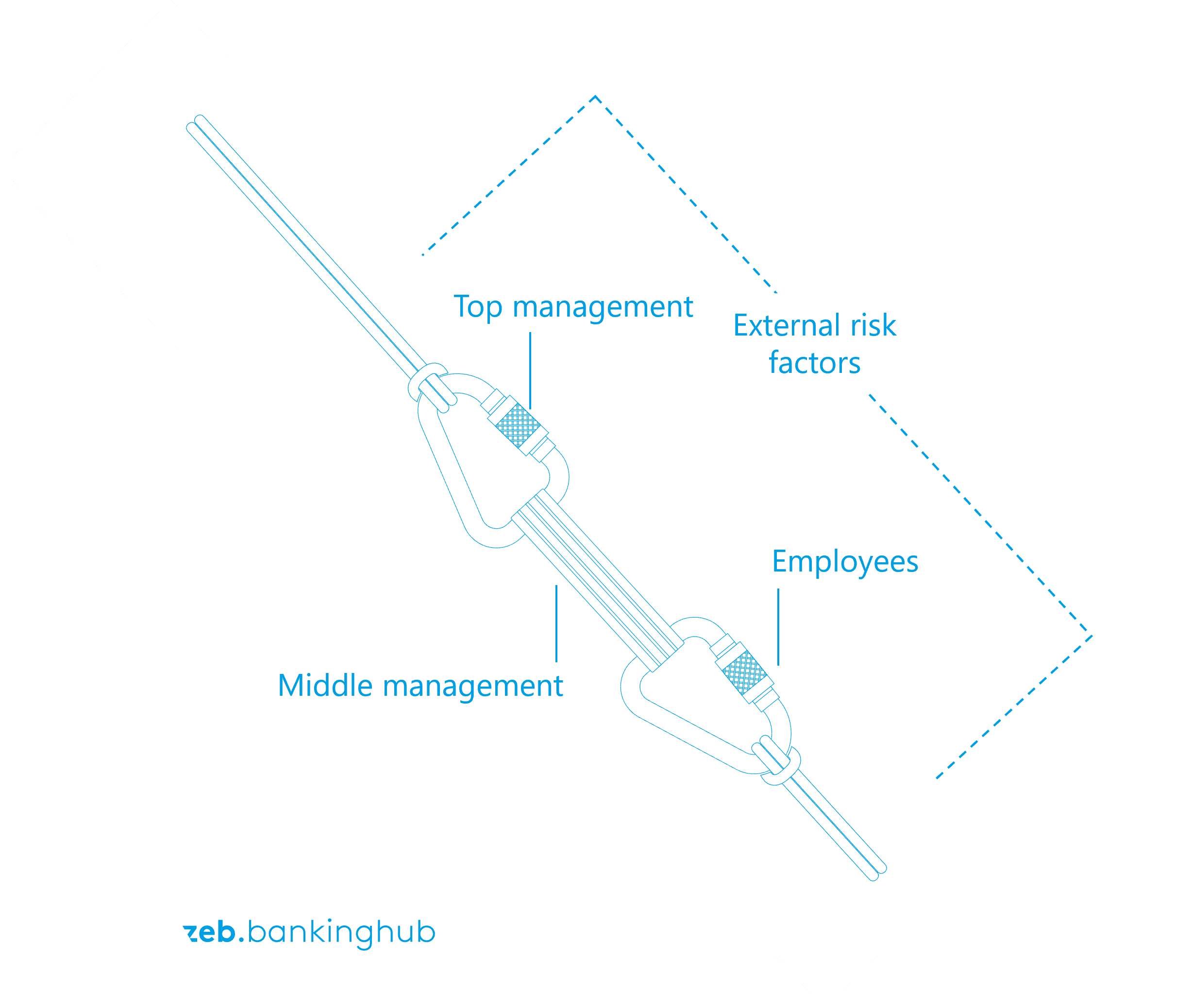
Future of regional banks: Tensions in middle management Figure 1: Tensions in middle management

How does the โ€œdrop-off pointโ€ between top management and middle management arise and what consequences does it have for the effectiveness of strategy?

Many regional banks are observing a growing gap between top management and middle management. Although strategic decisions are defined, they often reach middle management without the necessary context or adequate involvement. As a result, strategy loses clarity and commitment as it makes its way down the organizational hierarchy.

This so-called drop-off point is not only a communication problem but also an early warning signal. The greater the distance between strategic ambition and operational reality, the lower the organizationโ€™s ability to execute. When middle management is not included, problems arise: decisions are delegated upward, coordination loops lengthen and leadership becomes reactive instead of proactive. Change slows down and organizations lose credibility.
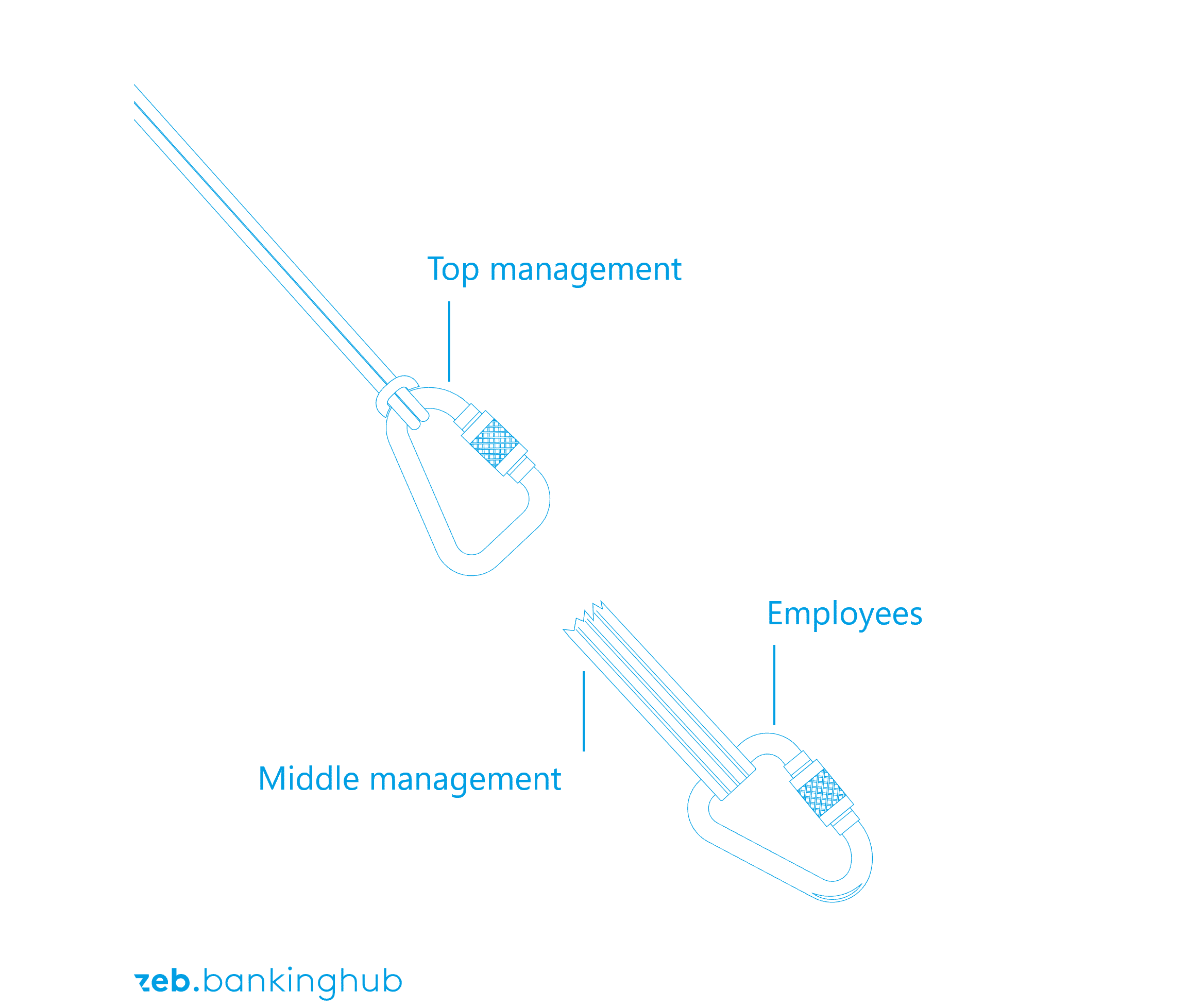
Future of regional banks: Drop-off point Figure 2: Drop-off point

Why isolated measures are not enough?

The obvious reaction is to provide more training, tools and programs. However, individual measures usually fall short if they remain isolated.

A key insight is that true impact cannot be achieved through individual training sessions or tools alone.

What matters is the interplay of four levers:

  • Mindset: self-reflection, role clarity and responsibility
  • Behavior: prioritizing, deciding, and leading through impact instead of through tasks
  • Collaboration: trust, psychological safety and clear areas of responsibility
  • Instruments: clear decision-making processes, defined roles and effective communication formats

Only when these four perspectives are considered together and developed consistently can middle management fully realize its role as a translator, an anchor of stability and a driver of change.
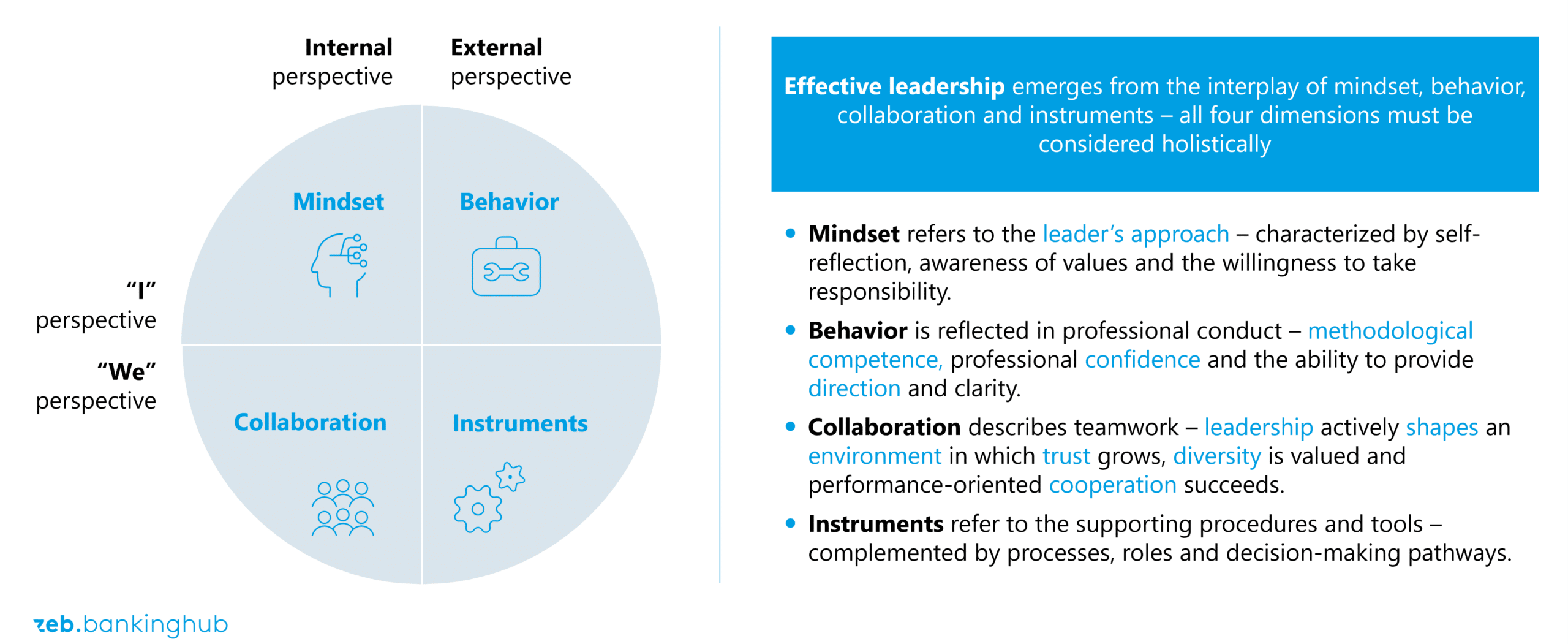
zeb leadership model Figure 3: zeb leadership model

Conclusion: the middle is the lever

Regional banks seeking to safeguard their future viability must strategically strengthen their middle management. This is where it is decided whether strategy becomes reality.

Would you like to learn more about the challenges posed by weak middle management and how to address them? In our white paper โ€œThe middle makes the differenceโ€, we answer the following questions: How much impact are we really enabling through our middle management? And where can we start to generate impact from the center?

You should now be able to talk about these key points of the article:

Why is middle management so critical for regional banks?

Middle management serves as the central interface that translates top managementโ€™s strategic goals into concrete action in day-to-day work. Because employees experience leadership here every day, this level determines whether strategies become reality or fail.

What is the so-called โ€œdrop-off pointโ€?

The โ€œdrop-off pointโ€ refers to a growing gap between top management and middle management. Strategic decisions often reach middle management without the necessary context or adequate involvement, causing strategy to lose clarity, commitment and ultimately effectiveness as it moves into the organization.

Why do isolated measures such as training sessions often fall short?

Individual measures such as training sessions or new tools usually fall short if they remain isolated. True impact in leadership does not come from individual measures alone, but only from the coordinated interplay of mindset, behavior, collaboration and the right framework conditions.

Which four levers are necessary for effective leadership in middle management?

To strengthen middle management as an anchor of stability and a driver of change, organizations must develop four perspectives holistically:

  • Mindset: a reflective understanding of oneโ€™s role and a sense of responsibility
  • Behavior: the ability to lead through impact rather than through tasks
  • Collaboration: building trust and psychological safety within the team
  • Instruments: effective communication formats and clear decision-making processes

Order the white paper here free of charge.

We look forward to discussing this with you.

Feel free to contact us!

Christina Block / Autorin BankingHub

Dr. Christina Block

Senior Manager at zeb Office Berlin
Nico Hahn / author BankingHub

Nico Hahn

Manager at zeb Office Frankfurt
Theresa Klockenbusch / author BankingHub

Theresa Klockenbusch

Senior Consultant at zeb Office Mรผnster
Rasheeda Duroshola / Author BankingHub

Rasheeda Duroshola

Consultant at zeb Office Frankfurt

The news you can look forward to on Mondays

Analyses, articles and interviews about trends & innovation in banking delivered right to your inbox every 2 weeks

Share article

Comments

Leave a Reply

Your email address will not be published. Required fields are marked *

BankingHub-Newsletter

Analyses, articles and interviews about trends & innovation in banking delivered right to your inbox every 2 weeks