What is the regulatory framework for energy performance certificates?
Energy performance certificates are a key element of the EU Energy Performance of Buildings Directive and the German Buildings Energy Act (Gebäudeenergiegesetz, GEG). The aim of these regulations is to create transparency regarding the energy efficiency of buildings to provide incentives for refurbishment measures. Banks must comply with these regulations when valuing properties as part of their real estate financing business.
An energy performance certificate provides information on the energy demand or consumption of a building and is intended to help future owners or tenants better estimate energy costs and environmental impacts. For banks, this information is highly relevant, not only from a regulatory but also from an economic perspective: the value of properties with poor energy efficiency could decrease at an above-average rate in the future, which in turn increases the risk for the bank.
What operational challenges are emerging for banks?
Storing energy performance certificates and ensuring compliance with the associated requirements presents various challenges. Key things to consider include:
- Data collection: Banks must either initiate and cover the costs for the creation of energy performance certificates themselves or convince the customers they are helping finance the property to do so.
- Data management: Banks must ensure that energy performance certificates are available for the properties in their portfolio and that their validity is being monitored. This requires robust data management systems that are seamlessly integrated with existing processes.
- Regular updates: Energy performance certificates are only valid for a limited period of time. Therefore, banks must establish mechanisms to have outdated documents reissued in good time.
- Quality assurance: The validity of the information in the energy performance certificate is essential. Banks are faced with the task of verifying the authenticity and accuracy of the documents submitted to them in order to minimize risks.
- Legal liability (or responsibility): Missing or incorrect energy performance certificates can have legal consequences for banks. It is therefore of crucial importance to ensure compliance by defining clear processes.
- Customer awareness: Many customers are not sufficiently aware of the importance of energy performance certificates. It is the banks’ task to proactively inform their customers and raise their awareness of the relevance of energy efficiency.
Our ESG study for you to download from our service portal
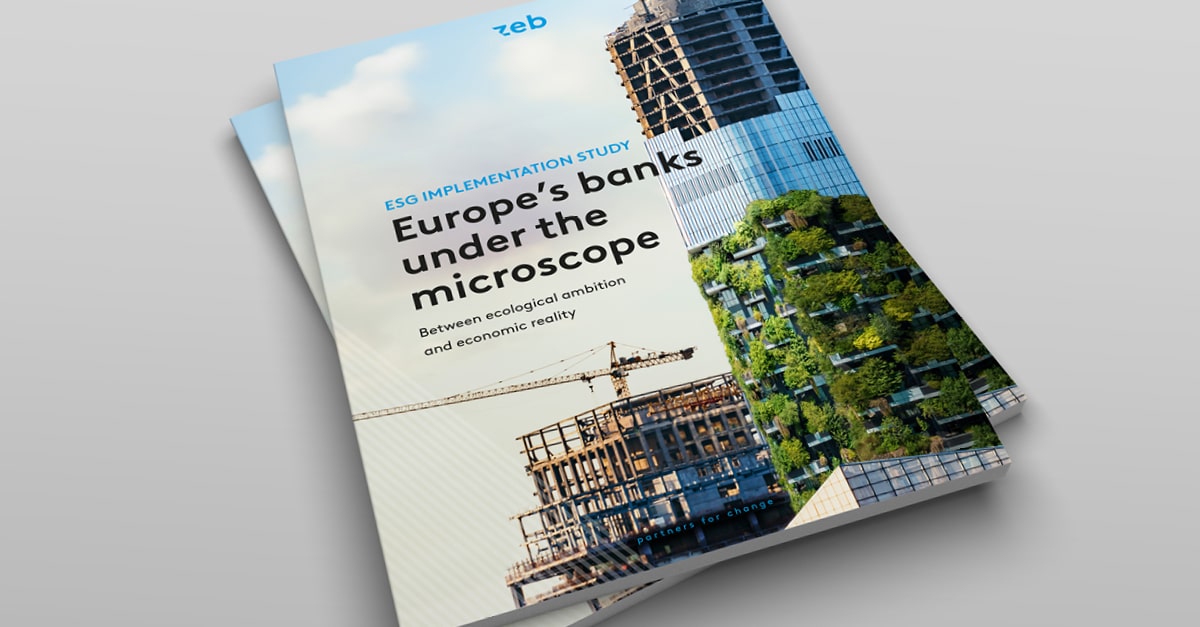
ESG Implementation Study 2024
Europe’s banks under the microscope: between ecological ambition and economic realityWhat strategic approaches and solutions can banks use?
Despite these challenges, compliance with energy performance certificate obligations also offers potential for banks. With strategic approaches, bank managers can not only reduce risks but also create competitive advantages.
- Driving digitalization forward: The entire process of recording, managing and verifying energy performance certificates can be optimized using digital tools and platforms. Moreover, automation and artificial intelligence help banks identify faulty or invalid documents more quickly.
- Taking up a sustainable position: Banks that do not yet focus on energy efficiency and sustainable properties will be at a strategic disadvantage in the area of “green banking”. Numerous banks have been successfully operating in this field for years.
- Training employees: Employees at all management levels should be kept in the loop about current legal requirements and best practices. This minimizes the risk of errors and increases efficiency.
- Leveraging partnerships: Cooperation with energy consultants makes it easier for bank customers to obtain high-quality energy performance certificates.
- Building an ecosystem: Banks can go beyond individual partnerships and lay the foundation for their own ecosystem to provide their customers with solutions to as wide a range of solutions to real estate-related issues as possible, thereby positioning themselves as a one-stop shop.
What sales opportunities arise from consistent data collection?
The goal of achieving climate neutrality among existing buildings by 2045 will necessitate investments in the three-digit billion range in the coming years. Nevertheless, current refurbishment activities are lagging well behind the required pace. A key reason for that is that many property owners are unaware of the economic potential of refurbishing or modernizing their properties and aren’t sure how to concretely approach the topic both from a technical and a financial perspective.
A remarkable finding in this context: according to an end customer survey, banks are not perceived as a potential source of information or as a competent contact for questions pertaining to the refurbishment and modernization of properties. Innovative financial services providers have already recognized this gap. Digital brokerage platforms in particular are increasingly positioning themselves at the interface between end customers and service providers such as energy consultants, tradespeople or real estate agents. They create transparency, simplify processes and thus get closer to the customer and their problem.
In real estate financing, it will in future be crucial for banks to start supporting potential customers at an early stage of their “refurbishment journey”. Those who are already available in the orientation phase can not only offer financing solutions, but also position themselves as a holistic partner throughout the entire transformation process.
The use of data is one crucial/pivotal element: By systematically collecting energy performance certificates or information on the energy efficiency of the properties in their portfolio, banks can lay the foundation for a sustainable customer approach. A modernization and refurbishment calculator allows them to develop custom energy refurbishment schedules from just a small amount of customer data. The customer provides the required information once. Then, the bank or a connected specialist system evaluates the data to derive possible measures in the background. This process allows energy potential to be identified and visualized in a structured manner without any additional effort for the customer. Based on this, banks can develop targeted sales campaigns for modernization loans over the coming years.
How will the importance of energy performance certificates in real estate financing develop in the future?
The importance of energy performance certificates in real estate financing will continue to increase in the coming years. Legislators, investors and society as a whole are placing greater emphasis on sustainability and energy efficiency. Managers in banks should therefore not only act in response to regulatory requirements but also learn to see sustainability as a strategic priority. This will enable them to lay the foundation for data-driven sales campaigns that can be used to specifically identify and address financing and refurbishment opportunities. Those who start supporting their customers at an early stage of their refurbishment journey position themselves as a relevant partner that offers real added value.
Banks that invest early in systems and strategies to overcome the challenges associated with energy performance certificates will be more successful in the long term. They not only protect themselves against potential risks, but also actively contribute to the energy transition and a more sustainable real estate market.
Our conclusion on the role of energy performance certificates for banks
For banks, storing energy performance certificates and complying with the associated standards is both a regulatory obligation and a strategic opportunity. Banks and their managers are faced with the challenge of mastering the balancing act between legal requirements, operational efficiency and customer orientation.
With a clear focus on digitalization, sustainability and proactive communication, banks can take on a pioneering role and harness both ecological and economic benefits.